


Home > “1871” > The People > Women’s Rights
The Chicago Fire happened right when women’s rights hit a critical juncture.
Before the Civil War, U.S. law treated women in much the same way it treats children today. Women couldn’t vote, and they couldn’t make binding agreements without their husbands’ approval. Even if their husbands were drunks– or otherwise incompetent– there was very little women could do by themselves.
Activists had been pushing for change for years. At first the women’s rights movement was closely tied in with the abolitionist movement. But after the war, the Constitution’s Fifteenth Amendment caused a split.

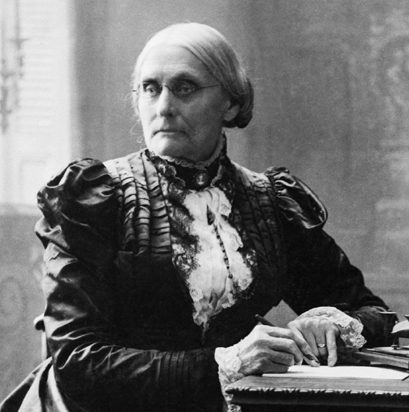
In 1871, women could only vote in the Wyoming and Utah Territories. Susan B. Anthony fought to change that, and was arrested for voting in the 1872 election. She hoped the U.S. Supreme Court would vindicate the cause, but two years later, the court ruled the other way.
These causes finally bore fruit in the early twentieth century. It was no coincidence that the Eighteenth Amendment (which banned alcohol) and the Nineteenth Amendment (which gave women the right to vote) were ratified barely a year apart.
Prohibition famously failed, but the rest of the women’s rights movement stayed intact. It has remained a cause célèbre— and women’s rights have continued to expand– from the 1920’s to today.
Home > “1871” > The People > Women’s Rights
News – Contact – Credits – Site Map
 Peter J. Spalding