


Home > “Break a Leg” > The People > Gay Rights
Sexuality has always been a complicated subject, and different cultures have handled it very differently. Ancient Greece, for example, was what we might today call “gay-friendly”. Men had no problem acting on their same-sex desires. The word “lesbian” came from the Greek island of Lesbos, which was famous for its erotic poetry.
The Victorian era was a very different story. In those days, people were disgusted by what they called “crimes against nature”. In 1895, Oscar Wilde was famously thrown in jail for having an affair with a man; by the time he was released, his health had collapsed, he went into exile, and he ended up dying broke a few years later.
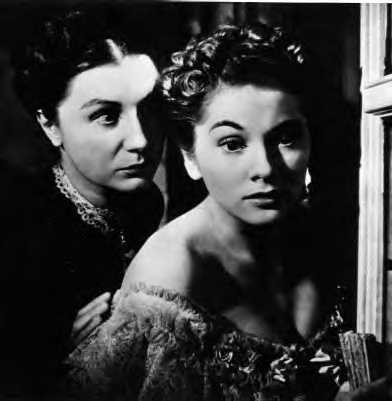
Photo credit: Selznick International/ United Artists
By those standards, California was relatively friendly turf, partly because a lot of people in Hollywood were gay. “Lavender marriages” were common, in which people married to keep up appearances. Vincente Minnelli was a famous example, having married Judy Garland. Rock Hudson was another, having married his agent’s secretary.
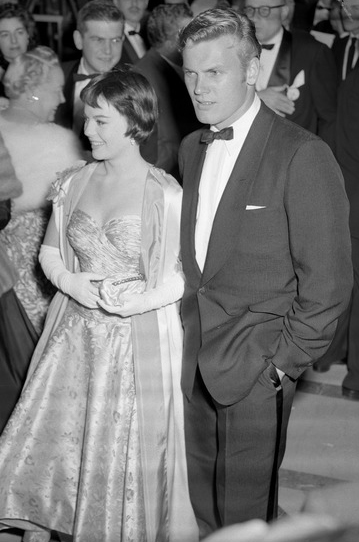
Photo credit: © UCLA Library/L.A. Times Photographic Archive
Slowly but surely, gay rights started to gain momentum. The Mattachine Society was one of the first advocacy groups, founded in Los Angeles in 1950. The lesbian organization Daughters of Bilitis soon followed in San Francisco. By today’s standards, their goals were pretty tame: they just wanted to live their lives and be treated like human beings.
In 1958, these groups scored their first major win in court. The Post Office had refused to deliver one of their magazines, on the grounds that its content was obscene. The U.S. Supreme Court ruled in favor of the magazine. It was the first time the high court had even acknowledged gay rights. Soon after that, in 1962, Illinois became the first state to de-criminalize homosexuality.

Photo credit: © New York Public Library
A lot of gay bars ended up being run by organized crime. It was an awkward arrangement, and a lot of these bars were notoriously poorly managed. Still, the mob got away with it because gays didn’t have many options. Gangsters found they could make good money under the table, and they certainly knew how to operate in secret. In many cases– including New York’s Stonewall Inn– bar owners extorted their own customers, then turned around and bribed the police.
In a few cases, people did fight back. One early example was in 1959, at downtown L.A.’s Cooper’s Donuts, when the store’s customers clashed with police. A similar skirmish happened in 1966, at San Francisco’s Compton’s Cafeteria. The tension finally came to a head in New York.
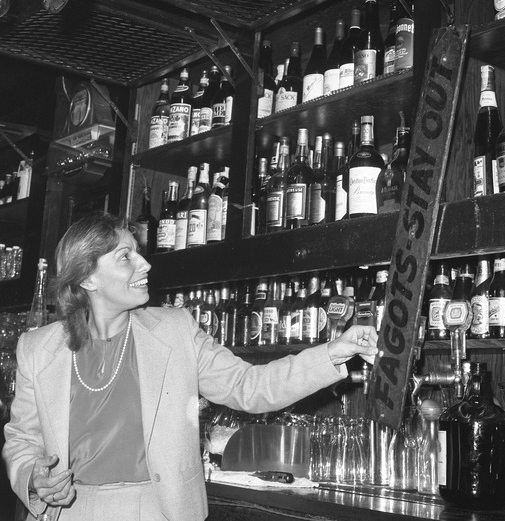
Photo credit: © UCLA Library/L.A. Times Photographic Archive
Stonewall turned out to be a watershed. Within a year, gay rights groups had sprouted up across the United States, and their work entered the mainstream. Equal rights became the new mantra. A number of cities held marches to commemorate the riots, in what soon became known as gay pride parades. Public officials started to take notice, and some activists like Harvey Milk even won election in their own right. The rest, as they say, is history….
Home > “Break a Leg” > The People > Gay Rights
News – Contact – Credits – Site Map
 Peter J. Spalding